Seed Potatoes in Ireland
No crop carries more weight in Ireland than the potato, and none is more affected by our weather. This page gives the planting dates that work here rather than the ones printed for southern England, the varieties that stand up to an Irish August, and where to buy certified seed potatoes without leaving the country.
Sowing and harvest calendar for Ireland
Months shaded below are the reliable windows for Irish conditions.
Quick facts
- Botanical name
- Solanum tuberosum
- Difficulty
- Easy, good first crop
- Hardiness
- Half hardy, protect from frost
- In Ireland
- Grows outdoors unprotected
- Sowing depth
- 10cm
- Spacing
- 40cm apart, 75cm between rows
- Position
- Full sun
- Containers
- Grows well in pots
- Sowing to harvest
- 10 to 22 weeks
- Harvest
- June to October
Planting depth and spacing
Drawn to scale from the figures in this guide.
How deep, seen from the side
How far apart, seen from above
The best seed potatoes varieties for Irish gardens
Picked for how they perform in a cool, damp, short summer rather than for catalogue photos.
Rooster
AGM/ Maincrop
The default Irish maincrop for good reason: heavy crops, keeps well, and floury without collapsing in the pot.
Growing notes and stockistsHome Guard
/ First early
The old reliable first early, out of the ground and eaten before blight has a chance to find it.
Growing notes and stockistsKerr's Pink
/ Maincrop
The floury maincrop older Irish cooks swear by, if you can forgive it for falling apart in the pot.
Growing notes and stockistsBritish Queen
AGM/ Second early
Grown here for flavour rather than convenience, and worth the trouble in a decent summer.
Growing notes and stockistsOrla
AGM/ First early
The early to grow if blight has beaten you before, and the obvious first choice for organic Irish plots.
Growing notes and stockistsChoosing and chitting seed potatoes
Decide first which of the three groups you want, because it changes everything that follows. First earlies go in first and come out first, in late June and July, before blight is usually a problem. Second earlies follow through July and August. Maincrop stays in the ground until September or October, yields far more, stores through the winter, and takes the full force of an Irish blight season.
Buy certified seed. It is sold in nets from January onwards in garden centres and by post, and the certification label is what separates it from a bag of eating potatoes. Choose tubers roughly the size of a hen’s egg. Very large seed can be cut in half a few days before planting, with at least two eyes on each piece, though in a wet Irish spring whole tubers rot less often, so it is not a saving worth making.
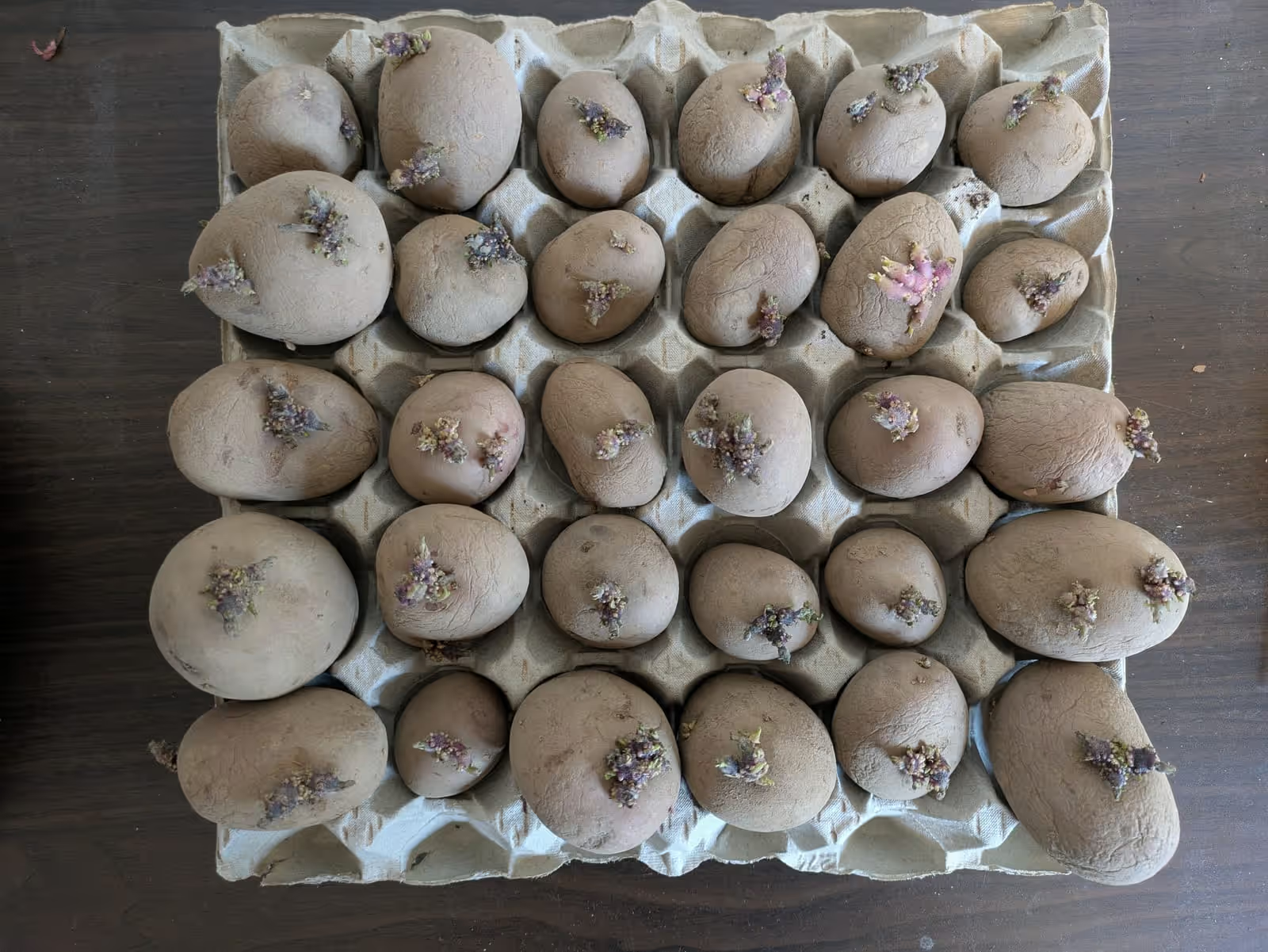
Chit first earlies from late January or early February. Stand them blunt end up in egg boxes somewhere cool, frost free and bright, and leave them six weeks. Short dark sprouts are what you want. Maincrop can be chitted from late February, or planted straight from the net.
Planting
Potatoes want an open, sunny site and ground that has not grown potatoes, tomatoes or any other Solanaceae for at least three years, and four if potato cyst nematode has ever been a problem locally. They are one of the few crops that genuinely appreciate well rotted manure dug in over the winter.
Wait for soil you can walk on without it sticking to your boots. Draw a drill about 10cm deep, set the tubers in with the sprouts pointing up, and cover. Earlies go 30cm apart in rows 50cm apart. Maincrop needs considerably more room, at 40cm apart in rows 75cm apart, both because the plants are bigger and because air moving through a wide-spaced crop dries the leaves and slows blight.
Earthing up and growing on
Shoots break the surface roughly three to five weeks after planting. From then until the foliage meets across the rows, keep an eye on the forecast: a clear still night in April or May will blacken exposed shoots across most inland counties.
Earth up when the shoots are about 20cm tall, drawing soil from between the rows into a ridge and leaving only the top leaves showing. Repeat two or three weeks later. A generous ridge protects against frost, keeps light off the tubers, and puts soil between blight spores and the crop.
Watering is rarely the issue here, but the four or five weeks from the appearance of flower buds onwards is when tubers bulk up, and a dry spell in June will cost you yield and encourage scab. That is the window worth watering in.
Lifting and storing
For first earlies, wait until the flowers open, then dig one plant and see. If the tubers are egg sized you have a crop. Lift as you need them, since they do not store and are at their best within hours of coming out of the ground.
For maincrop, cut the haulm off at ground level in early to mid September, or the moment blight appears, whichever comes first. Leave the tubers in the soil for two to three weeks so the skins set, then lift on a dry day and let them surface dry for a couple of hours before bagging.
Store in paper or hessian sacks, never polythene, somewhere dark, dry and frost free, ideally around 5 to 8C. Check the sacks every few weeks and remove any that have gone soft, because one blighted tuber will take a bag down with it. Set aside any that turn green for the compost heap rather than the kitchen.
What goes wrong with potatoes in Ireland
Late blight
Signs: Dark brown or black patches on leaves, often with a pale yellowing edge and a faint white fuzz underneath in humid weather. The whole crop can collapse and smell sour within a week. Infected tubers show sunken reddish brown rot under the skin.
What to do: Met Eireann issues blight warnings when the weather turns humid and mild, and that is your cue. Grow first earlies so they are lifted before the usual July onset, choose resistant varieties such as Sarpo Mira, Setanta, Orla or Cara for maincrop, space plants widely so the foliage dries, and earth up generously so spores washing off the leaves cannot reach the tubers. Once blight is in the haulm, cut every stem off at ground level, remove it from the plot, and leave the tubers in the soil for two to three weeks before lifting so the skins set and any spores on the surface die off.
Frost damage to emerging shoots
Signs: Blackened, water-soaked shoot tips a morning or two after a clear cold night in April or May.
What to do: Late frosts are routine inland and in the midlands well into May, and a St Patrick's Day planting in a cold garden will meet at least one. Draw soil over the shoots whenever frost is forecast, or throw fleece over the row. Plants almost always regrow from below ground, but the check costs you two or three weeks of crop, so gardens away from the coast are better off planting in April.
Common scab
Signs: Raised corky brown patches on the skin. The flesh underneath is fine, so it is a cosmetic problem, not a rot.
What to do: Scab is worst on limy, light or stony soil in a dry spring, which in Ireland means the east and any garden that has been limed recently. Never lime before potatoes, work in plenty of compost, and water through the four or five weeks after flowering starts, which is when the young tubers are forming their skins.
Slug holes in maincrop tubers
Signs: Small neat entry holes on the surface opening into large hollow tunnels through the tuber, usually only noticed when you cut one open.
What to do: The keeled slug feeds underground and is the main reason a maincrop lifted in November is disappointing. It is worst in wet, heavy, weedy ground, which describes a lot of Irish plots. Lift maincrop as soon as the skins have set rather than leaving it in the soil, keep the plot weed free, and switch to earlies and second earlies if your garden loses a lot every year.
Potato cyst nematode
Signs: Plants that yellow and die back early for no obvious reason, poor yields of tiny tubers, and pinhead sized white or brown cysts visible on the roots if you lift a plant carefully.
What to do: Once in the soil it stays for years, which is the single strongest argument for buying certified seed and never planting supermarket potatoes. Rotate so potatoes return to the same ground no more often than one year in four, and buy varieties listed as resistant if you already have a problem. There is no home treatment worth the name.
Where to buy seed potatoes in Ireland
Irish suppliers that stock this, so postage stays domestic and seed arrives in time to sow. These are plain links, not paid placements.
Order online
- Fruit Hill Farm Irish Organic seed potatoes split by earlies, maincrop and blight resistant Bantry based supplier to Ireland's commercial organic growers. Certified organic and biodynamic seed, mail order only. Visit Fruit Hill Farm , Co. Cork
- Quickcrop Irish Sorted by first early, second early and maincrop Ballymote based, lists sowing and harvest months per product and ships across Ireland. Visit Quickcrop , Co. Sligo
Common questions
When should I plant seed potatoes in Ireland?
The tradition is St Patrick's Day, and in a mild coastal garden in Cork, Kerry or Wexford that works for first earlies. For most of the country it is optimistic. What matters is soil temperature and drainage, not the date, so wait until the soil is workable and not sodden. In practice that means mid to late March for first earlies in the south and along the coast, April for first and second earlies almost everywhere else, and late April into early May for maincrop. A crop planted into cold wet soil in March sits and sulks while an April planting catches it up by June.
Do I really need to chit seed potatoes?
For first earlies, yes, it is worth it, because sprouting the tubers before planting gains you roughly two to three weeks and that can be the difference between lifting in late June and lifting in mid July. Stand the tubers in egg boxes or a shallow tray with the blunt end that carries most of the eyes facing up, somewhere cool, bright and frost free such as a spare bedroom window or a porch, from late January or early February. You want short, stubby, dark green or purple sprouts about 2cm long, not long white shoots, which mean the room is too warm or too dark. For maincrop it makes far less difference and plenty of Irish growers skip it entirely.
Can I plant potatoes from the supermarket?
Do not. Ware potatoes are usually treated with a sprout suppressant, so many will simply never grow, and those that do can bring blackleg, virus or potato cyst nematode into ground that then stays infected for years. Certified seed potatoes are grown in inspected crops in areas chosen for low aphid pressure and sold with a certification label. They cost a few euro for a net that will fill a bed, which is cheap insurance. The same applies to saving your own seed year after year: virus builds up invisibly and yields drift downwards, so buy fresh certified seed each season.
Which potato varieties are most blight resistant?
The Sarpo varieties, particularly Sarpo Mira and Sarpo Axona, are in a class of their own and will often still be standing green in September when everything around them has gone. They are very floury and not to everyone's taste. Among varieties Irish gardeners actually eat by choice, Setanta and Orla were both bred in Ireland with blight in mind, and Cara has long had a reputation for holding on late. No variety is immune, and resistance to the leaf blight does not always mean the tubers are safe too, so cut the haulm at the first sign regardless of what you planted.
How many seed potatoes do I need and how much will I get?
A 2kg net usually holds somewhere between fifteen and twenty five tubers depending on their size, which at 30cm apart plants roughly five to seven metres of row. As a working figure, expect about 1kg of potatoes per plant from first earlies and up to twice that from a well grown maincrop in a decent year. Earlies are the better use of a small garden, because they occupy the ground for only three months, come out before blight arrives, and taste like nothing you can buy.
Can I grow potatoes in bags or containers?
Yes, and it suits Irish gardens with heavy soil or no space. Use a bag or barrel of at least 40 litres, put three tubers in a 40 litre bag or one in a large bucket, start with 15cm of compost and top up as the shoots grow until the container is nearly full. First earlies are the best choice because the crop is over before the compost exhausts itself. The one thing container potatoes will not forgive is drying out, and a bag in a sheltered spot can need watering daily in July even in an Irish summer.
What does earthing up actually do?
Three things. It stops light reaching the developing tubers, which would turn them green and inedible. It protects emerging shoots from late frost. And it puts several centimetres of soil between blight spores washing off the leaves and the tubers below, which is the part most people do not realise. Draw soil up from between the rows with a hoe or spade when the shoots are about 20cm tall, leaving the top few leaves showing, and repeat once or twice more until the ridge is 15 to 20cm high.
What are the little green tomatoes on my potato plants?
Those are potato fruit, and they are poisonous. Potatoes are in the same family as tomatoes, so some varieties set small green berries after flowering in a good summer. They look exactly like unripe cherry tomatoes, which is precisely the problem in a garden with children in it, and they contain enough solanine to make someone quite ill. Pick them off and bin them rather than composting them where they might be found again. They are not a sign of anything wrong with the plant and removing them does not affect the crop underneath.