Wildflower Seeds in Ireland
Wildflower seed is the easiest thing in the garden to buy and one of the hardest to get right. Nearly every disappointing Irish meadow comes down to the same two mistakes: sowing into soil that is far too rich, and buying a mix with almost nothing native to Ireland in it. This page covers when to sow here, which mixes are worth the money, and where to buy seed with Irish provenance.
Sowing and harvest calendar for Ireland
Months shaded below are the reliable windows for Irish conditions.
Quick facts
- Botanical name
- Mixed species
- Difficulty
- Moderate
- Hardiness
- Hardy, takes Irish frost
- In Ireland
- Grows outdoors unprotected
- Germination
- 14 to 30 days at 8 to 18C
- Sowing rate
- 1.5g per square metre
- Position
- Full sun
- Containers
- Needs open ground
- In flower
- May to September
Sowing depth and spacing
Drawn to scale from the figures in this guide.
How much seed per square metre
The best wildflower varieties for Irish gardens
Picked for how they perform in a cool, damp, short summer rather than for catalogue photos.
Native Irish Meadow Mix
Open pollinated / Perennial native meadow mix
The mix to choose if you want a permanent meadow that belongs here, and you can wait three years for it.
Growing notes and stockistsPollinator and Bee Mix
Open pollinated / Pollinator mix
Worth sowing on bare ground if the species list is native, but mowing your lawn less often helps Irish bees more.
Growing notes and stockistsCornfield Annuals Mix
Open pollinated / Annual cornfield mix
The only wildflower mix that delivers in its first summer, but it needs the soil disturbed again every single year.
Growing notes and stockistsShade and Woodland Edge Mix
Open pollinated / Shade and woodland edge mix
For damp shade under a hedge or deciduous trees, where a meadow mix would simply rot away.
Growing notes and stockistsPreparing the ground
This step decides everything and it is the one people skip. Wildflowers do not beat grass by growing faster, they survive where grass cannot, so the whole job is making the ground poor enough that grass loses its advantage.
For a new meadow on an open patch, strip off 100 to 150mm of topsoil and take it away. What is left will look unpromising, pale and stony, and that is exactly right. If stripping is not practical, pick the worst piece of ground you have, the compacted strip by the drive or the thin soil over rubble, rather than the good bed you were saving for it.
Clear the existing vegetation completely. Perennial grasses, docks and creeping buttercup will come straight back through a new sowing, and once they are established in a meadow they are very difficult to remove. Then rake to a firm, fine tilth and leave it three or four weeks so the first flush of weed seed germinates, and hoe that off before you sow.
Do not add compost, manure, fertiliser or fresh topsoil at any stage. Ever.
Sowing
Sow between late August and October for a perennial native meadow, or March and April for cornfield annuals. Autumn sowing suits Irish conditions well because the ground is still warm, the rain is reliable, and the winter cold that many natives need to break dormancy arrives for free.
Mix the seed with roughly ten times its volume of dry silver sand. At 1 to 1.5 grams per square metre a pure wildflower mix is a startlingly small quantity, and the sand is the only practical way to see where you have already been. Divide the seed and the area into halves and sow in two passes at right angles.
Do not cover the seed. Almost all wildflower seed is surface sown and needs light. Tread or roll it in so the seed makes firm contact with soil, and leave it at that. Netting or a scatter of prunings over the area for the first month keeps cats and birds off a freshly raked seedbed.
The first year
Year one is a test of nerve. What comes up is mostly leaf, seedling rosettes and whatever grass survived, with a handful of flowers at most. This is what a perennial meadow is supposed to look like at that stage, and it is why cornfield annual mixes are so much more popular in the first summer and so much less satisfying in the third.
Cut the sward back to about 50mm whenever it reaches 200 to 300mm during the first summer, and remove the clippings each time. It feels wrong to mow a meadow, but it stops the fast growers shading out the slow ones and it drains fertility out of the soil, which is the long game.
The cutting regime
From year two, cut once in early September. Leave the cut material lying for a week so ripe seed drops, then rake every bit of it off. Taking the arisings away is not tidiness, it is the mechanism that keeps fertility falling and the meadow open.
Where the sward is dominated by coarse grass, add a second cut in late March or early April before the flowers get going. A scythe or a brushcutter handles a real meadow better than any mower, and both leave the material in a state you can actually rake.
What goes wrong with wildflowers in Ireland
Grass swamps the flowers
Signs: A thick green sward by June with only a handful of flower heads showing above it, and a dense mat of dead grass at ground level by autumn.
What to do: This is a fertility problem, not a seed problem. Never add compost or manure, remove every scrap of cut material after each cut so nutrients leave the site, and sow yellow rattle in autumn. Yellow rattle is a hemiparasite that attaches to grass roots and can cut grass vigour substantially, which is what opens the gaps the flowers need.
Nothing much flowered in the first summer
Signs: A green patch of leafy rosettes and grasses in year one, with a few annual poppies and nothing else.
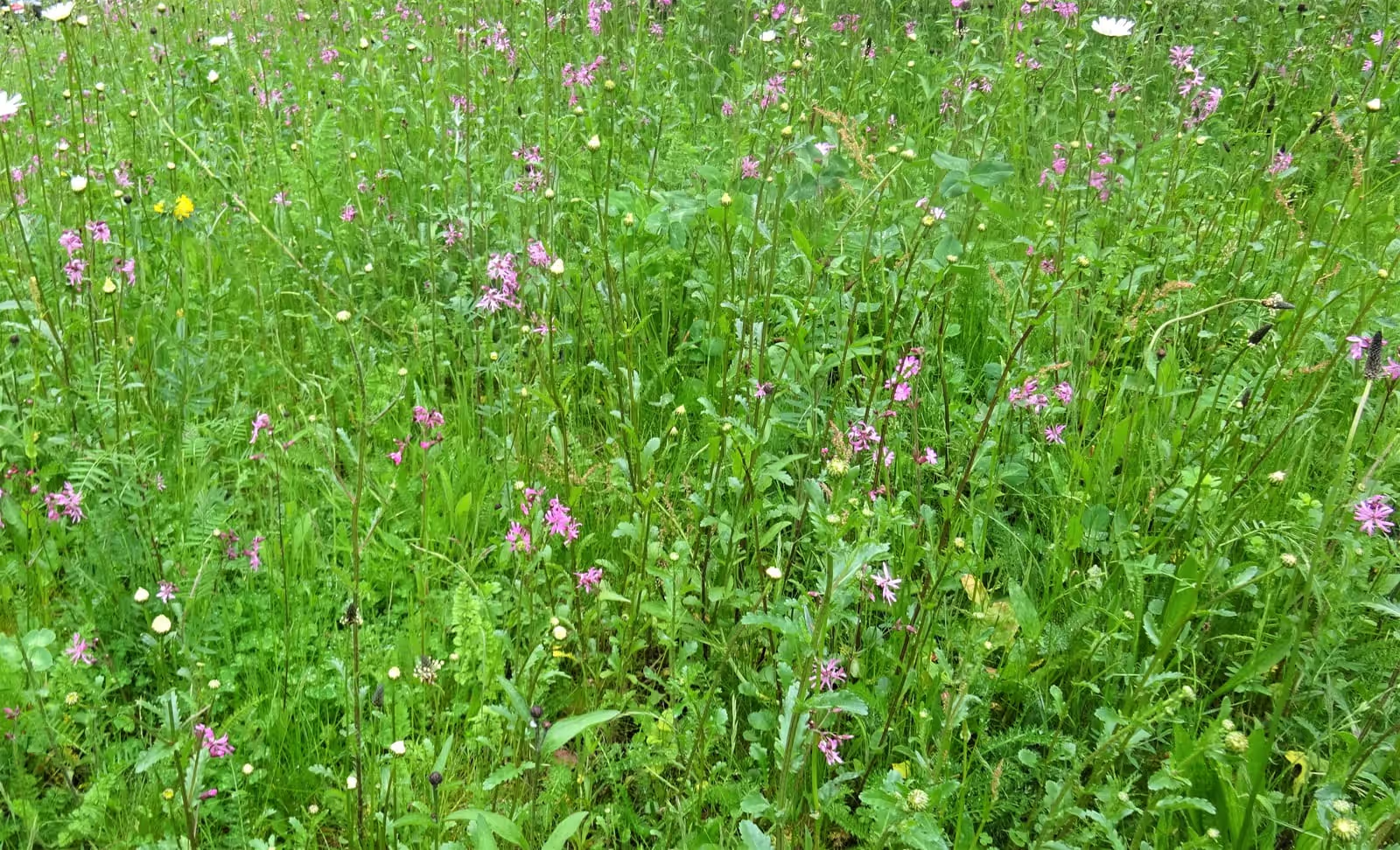
What to do: This is normal for a perennial native meadow and is not a failure. Knapweed, scabious, oxeye daisy and bird's-foot trefoil spend the first season building roots. Expect a thin showing in year one, a real display in year two, and the meadow the packet photographed in year three. If you need colour immediately, sow a cornfield annual mix alongside it.
The mix turns out to be non-native
Signs: Californian poppy, phacelia, cosmos, nigella or forget-me-not appearing in something sold as a wildflower mix.
What to do: A lot of wildflower seed sold in Ireland is imported and blended for the general European market. Read the species list on the back before you buy, and ask the supplier where the seed was grown. For a permanent meadow near hedgerow or semi-natural ground, insist on Irish native species of Irish provenance. Non-native seed can outcompete local plants and dilute the genetics of native populations.
Slugs clear the seedlings
Signs: Germination looks good in autumn, then the seedlings vanish over a mild wet winter.
What to do: Ireland's mild damp winters keep slugs feeding all year, and a freshly cleared seedbed is exactly what they want. Sow at the full rate rather than sparingly so there is something to spare, avoid leaving mulch or debris around the edges, and accept that some replacement sowing in spring is normal.
Docks, nettles and creeping buttercup take over
Signs: Broad-leaved weeds dominating the sward within two seasons, usually in the damper corners.
What to do: These three are the signature of rich, wet, disturbed Irish ground. Dig them out individually rather than cutting, because cutting a dock just makes it branch. Persistent patches usually mean the fertility is still too high, so keep cutting and removing arisings and give it another two years.
The meadow collapses and rots in autumn
Signs: A flattened, slimy mat of vegetation after the first autumn storms.
What to do: Irish autumn gales and rain will lodge a tall meadow. Cut in early September, leave the cuttings a week so the seed drops, then rake every bit of it off and compost it elsewhere. Leaving the cut material in place feeds the grass and undoes a season of work.
Where to buy wildflower seeds in Ireland
Irish suppliers that stock this, so postage stays domestic and seed arrives in time to sow. These are plain links, not paid placements.
Order online
- Quickcrop Irish Every mix branded native Irish grown, including shade and flowering lawn options Ballymote based, lists sowing and harvest months per product and ships across Ireland. Visit Quickcrop , Co. Sligo
- Seedaholic Irish States its wildflower seed is produced within the British Isles Family run in Clonbur since 2005, deep heirloom range with detailed growing notes on every packet. Visit Seedaholic , Co. Galway
- Fruit Hill Farm Irish Organic meadow mixes, continental rather than Irish native Bantry based supplier to Ireland's commercial organic growers. Certified organic and biodynamic seed, mail order only. Visit Fruit Hill Farm , Co. Cork
Garden centres and mixed retailers
- Johnstown Garden Centre Irish Thirty branded mixes, imported rather than Irish native Third generation family business near Naas with the widest branded range, though popular varieties sell out by midsummer. Visit Johnstown Garden Centre , Co. Kildare
- Mr Middleton Irish Small range including a mix for damp sites Mail order arm of a long established Mary Street shop, carries the familiar named varieties the organic specialists skip. Visit Mr Middleton , Co. Dublin
Common questions
When should I sow wildflower seeds in Ireland?
Late August to October is the best window for a perennial native meadow. Yellow rattle genuinely will not germinate without a spell of winter cold, and several other natives such as devil's-bit scabious come up far more evenly after one, so an autumn sowing gets that for free and the seedlings are away early the following spring. March and April suit cornfield annuals such as poppy, cornflower and corn marigold, which germinate readily without cold and flower the same summer. Avoid sowing in midsummer, when the ground dries out just often enough here to catch you out.
Do wildflowers really need poor soil?
Yes, and it is the single most ignored piece of advice on the subject. Wildflowers are not stronger than grass, they are simply better at surviving where grass struggles. Give them a fertile Irish soil and the grass wins outright within two seasons. The standard fix is to strip 100 to 150mm of topsoil off the area and sow into what is left, or to choose the thinnest, stoniest, most neglected part of the garden. Never add compost, manure or a general fertiliser to a meadow area, and never sow one where a vegetable bed or a horse paddock used to be without stripping first.
What is yellow rattle and do I need it?
Yellow rattle, Rhinanthus minor, is a native annual that attaches to the roots of grasses and takes water and nutrients from them, weakening the grass and opening space for other flowers. It is the standard tool for turning a grassy patch into a meadow and is worth sowing on its own for a year before anything else. It must go in between August and October because the seed needs winter cold to germinate, it must land on soil rather than thatch, so scarify or mow very short first, and the seed is short lived, so buy it fresh each autumn rather than using an old packet.
Can I just scatter wildflower seed over my lawn?
Scattered onto an intact lawn it will do almost nothing. The seed needs to reach bare soil, and an established Irish lawn has none. If you want to convert a lawn, mow it as short as the mower will go in late summer, remove the clippings, then scarify hard until at least half the ground is visible bare earth before sowing. Even then the honest advice for a lawn is to start with yellow rattle, cut less often, and let the clover, selfheal and bird's-foot trefoil that are usually already there come up before spending money on seed.
How much wildflower seed do I need?
For a mix of pure wildflower seed with no grass in it, around 1 to 1.5 grams per square metre is plenty, which is far less than most people expect and roughly a level teaspoon spread over a square metre. Mixes that include a meadow grass component are sown heavier, usually 4 to 5 grams per square metre. Sowing thicker does not give more flowers, it gives a crowded stand that thins itself out anyway. Bulk the seed with dry silver sand so you can see where you have been.
Is imported wildflower seed a problem in Ireland?
It can be. Much of what is sold here as wildflower seed is grown in continental Europe or Britain and blended for a general market, so it contains species that are not native to Ireland at all, and native species raised from foreign stock that flower at the wrong time for our insects. It is worth being straight about where the official advice actually sits, because it goes further than most seed sellers admit. The All-Ireland Pollinator Plan, which the National Biodiversity Data Centre coordinates, does not recommend sowing wildflower seed mixes at all, native or otherwise, on the grounds that they can do more harm than good. It treats native local provenance seed as a limited exception for ground with no seed bank left. So the honest order is: let what is already there flower first, and reach for seed only where the ground is genuinely bare. If you do sow, buy Irish grown native seed and read the species list. Near hedgerows, old grassland or any other semi-natural habitat, do not sow at all.
How long before a wildflower meadow looks like the packet photo?
Two to three years for a perennial native meadow, and there is no shortcut. Year one is mostly leaf and grass with a scatter of annuals. Year two gives a genuine show from oxeye daisy, knapweed and bird's-foot trefoil. Year three is when it settles into something that looks like the photograph, assuming the fertility came down and you have been cutting and removing every autumn. The mixes that look spectacular in the first summer are annual cornfield mixes, and they need the ground disturbed again every year to keep going.